Technical Design
Key Terms Within Technical Codes
Sound
-
Diagetic Sound - This type of sound originates from the film world we are watching. E.g Ambiance
-
Non Diagectic Sound - This type of sound is added in the post production stage. E.g Sound track
-
Sound Bridge - To maintain continuity in a sequence of running a soundtrack under a series of images to link them.
-
Voice Over/Narration - Also added at post production stage and are typically used to anchor the meanings in a film and give guidance to the audience. A great example of this if BBC's Frozen Planet.
-
Contrapuntal Sound - Where sounds juxtaposes against what you see on the screen
-
Selective Sound - The removal of some sounds and the retention of others to make significant sounds to stand out.
Lighting
-
Key Light - This is the brightest, most influential light which works to create a focal point. This is also know as the Star light.
-
Back Light - This lighting helps conteract the effect of key light, and makes the subjects more rounded
-
FIller Light - This lighting helps soften the harsh shadows which are created by back and key lighting. There may be more than one of these lights in one shot.
-
High Key Lighting - This means that most of the shadows within a scene are filled in using filter lights and create a more realistic shot.
-
Low Key Lighting - This lighting creates shadows and is mainly used in horror films or night scenes
Shot Types
Establishing shot - This is normally an extreme wide angle shot, which is used to set the scene of the production, making the audience aware of the time of day and where they are. | Extreme Long shot - This shot is like an establishing shot, however closer up. It's mainly used to show the setting of the scene. For example, a shot of a house. |
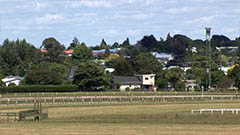
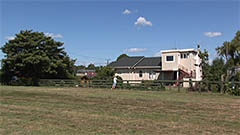
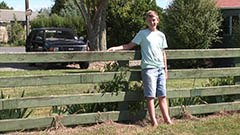
Long Shot - A long shot is where the primary's whole body is shown in the image, this normally fits the size of the screen. | Medium Shot - This is where the camera only captures from the top of the primary's head, to the bottom of their stomach. |
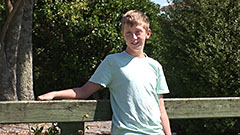
 Medium Close Up - Where the camera captures the whole head, and top of the shoulders, takes up most of the screen. |  Close Up - This shot is of the head only. Leaving little space around the face empty. |
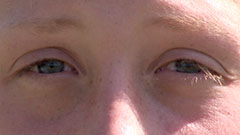
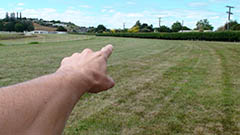
Extreme Close up - An extreme close up focuses on just the eyes and nose of the primary. This shot is mainly used to show emotion. | Point of view shot - Where the camera shows the view of someones perspective. |
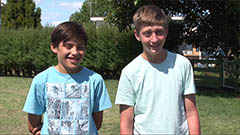
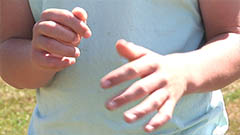
Two Shot - A shot of two people next to eachother, simular to a medium shot. | Cut In - Showing another part of the primary's body moving. |
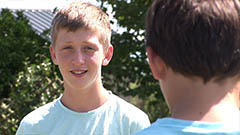
Over the shoulder shot - Where the camera is angled behind a person, shooting at the another subject. |
Framing
Shots are all about composition. Rather than directly pointing the camera straight towards the subject, you need to plan and compose an image. Framing is known as the process of creating composition and the rules of framing our essentially the same for photography and film. However, various styles of framing can have different meanings to people. What one person may find dramatic, aother may believe it to be pointless.
The Rule of Thirds is a division between the frame. This is where the image is set into nine sections. These nine scetions act as 'Points of Focus' and make framing a lot easier.
 |
When framing an image, you've got to think about the "Headroom", "leading room", and "looking room". These three terms refer to the amount of space in the frame which is left empty.
Head room refers too the amount of space which is left between the top of the frame and the subjects head. In most shots tighter than a medium shot, there should be little space left in the headroom or theres a risk of the image looking visually un-interesting.
Leading and Looking room is the space left within the shot for the subject to move into or to look into. Without this empty space, the framing may look out of place and uncomfortable.
Canon 450d Training - Notes
-
Image stabiliser kicks in at a 30th. Canon's Image Stabilizer (IS) technology uses a lens shift-type system to detect and correct slight camera shakes when capturing an image. Pressing the shutter button halfway releases the lock on the Image Stabilizer system.
-
100 ISO - Spanish sunny day
-
400 ISO - Cloudy Day
-
1600 - Dawn to Dusk, be careful as pixel quality is less
-
TTL - Through the lens lightmetre
-
Contrast literally means black and light
-
Raw is the highest quality setting
-
White Balance - telling the camera whats actually white
-
Portrait Mode - tries to even and balance light
-
TV prioritse = shutter speed priority
-
AV prioritise = apperture priority
-
Anything under a 30th second use a tripod
-
2.8 smallest apperture - 91 biggest
-
A-Dep - Automatic depth of field
-
Af point - Telling the camera where to capture
-
Using built in flash quickens shutter speed, however be careful not to loose control
Sony PD 170 and Mirantz Training - Notes
- AGC - automatic gage control, this controls the sound
- Chanel 1 input should be set with the boom mic, and is the most direct sound, and also the most important
- Channel 2 input should be placed with the gun mic and set to auto
- Menu - audio - gage - set to automatic
- SQN-3 or AD-261 are the best channel mixers. Remember not to use rechargable batteries
- Turn switch to INT - check battery by pressing green button, it should reach 9db
- Set the mic to 48v
- Master on mixer should be set to 0
- Sound should be peaking at 12
- Mic atinuation helps you combat sound
Promotional Posters
As a form of print promotion on the day of our shoot, we want to have flyers to hand out to the public making them aware of what we are filming and what we are filming for. Therefore using a company called VistaPrint (www.vistaprint.co.uk) we have created small flyers with the information of our production team, as well as information on the documentary to inform the public of we are there for and the impact we are trying to create. Also, on the flyers we have used cross media to advertise our Facebook, Yola site as well as our e-mail address. |  As well as using on the shoot flyers to aware the public of our documentary, we are also creating large posters to display on the day of the festival which will strongly focus on advertising on just our documentary. We didn't want to include any information about us on the posters as we would be standing by the stall to speak to the public personally and we wanted the posters to be straight to the point to hold the viewers attention. |
YouTube Channel
http://www.youtube.com/user/FragileFocus?feature=mhee
Founded in February 2005, YouTube allows billions of people to discover, watch and share originally created videos. YouTube provides a forum for people to connect, inform and inspire others across the globe and acts as a distribution platform for original-content creators and advertisers, large and small.(http://www.youtube.com/t/about_youtube)
Over the years, YouTube has become a world wide phenomenon and has over a billion people watching and subscribing to videos online each week. Therefore, we thought this would be a great place to promote our documentary. Also, on our YouTube channel we want to promote our Trailer and also have a Behind The Scenes Video so people can get to know us.

Raw Editing in Photoshop
 Before |  After |
To start off by editing a raw image, I had to make sure that my camera setting was set to the highest possible setting, RAW. When uploading the image, I opened the raw file which opened up the raw editing page on photoshop. Like Most Magnum photographers, I increased the saturation by +50 and sharpened my image by +60.
 |  |
On the bottom of the first tab, I converted my image to greyscale becuase I wanted my image to represent a negetive feel. I also increased the conrast to ensure that my colours still stood out. I also decreased the Lens Vignetting to -50 because I wanted the edges dark in order to create the bin as a focal point as this was the whole story of the image.
Copyright
When creating our documentary, we have to be aware of the copyright music we add. If we are using more than 30 seconds of the music, we will have to ensure we get the rights to play the artists music.
'Vondelpark - Hipbone' is a choice of song we really thought would portray the poetic style in our documentary. The 'chilled' pace of the music, would fit perfectly with our tracking shots of within the taxi, showing the outside location of where we are travelling. This will act as a breather from the interviews.
